B.Sc. Chemistry
- B.A. Tamil
- B.A. English
- B.A. History
- B.A. Economics
- B.A. Criminology and Police Administration
- B.Com. General
- B.Com. (Computer Applications)
- B.Com. (Professional Accounting)
- BBA – Bachelor of Business Administration
- BCA – Bachelor of Computer Applications
- B.Sc. Computer Science
- B.Sc. Computer Science (Artificial Intelligence)
- B.Sc. Mathematics
- B.Sc. Chemistry
- B.Sc. Physics
- B.Sc. Forensic Science
- B.Sc. Physical Education
- B.Sc. Costume Designing & Fashion Technology
- B.Sc. Hotel Management & Catering Science
B.Sc. Chemistry
Programme Overview
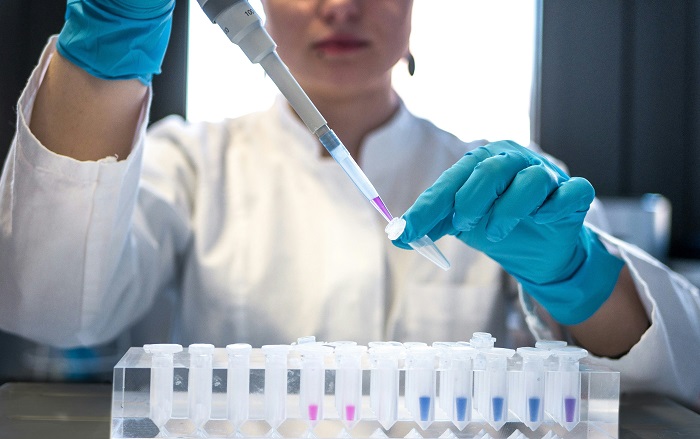
The Bachelor of Science in Chemistry (B.Sc. Chemistry) is a three-year undergraduate programme that provides comprehensive knowledge of chemical principles, laboratory techniques, and practical applications in science and industry. The course focuses on understanding the composition, structure, properties, and reactions of matter.
Chemistry plays a vital role in pharmaceuticals, agriculture, environmental science, biotechnology, food processing, and industrial manufacturing. This programme equips students with strong theoretical knowledge and hands-on laboratory skills to pursue careers in research, industry, and higher education.
-
To provide strong foundation in organic, inorganic, and physical chemistry.
-
To develop practical laboratory skills and analytical techniques.
-
To understand chemical reactions and industrial applications.
-
To promote research aptitude and scientific thinking.
-
To prepare students for higher studies and professional careers.
Core Subjects
The core curriculum generally includes:
-
Inorganic Chemistry
-
Organic Chemistry
-
Physical Chemistry
-
Analytical Chemistry
-
Environmental Chemistry
-
Industrial Chemistry
-
Polymer Chemistry
-
Biochemistry (Basic)
-
Spectroscopy
-
Chemical Thermodynamics
-
Electrochemistry
-
Coordination Chemistry
-
Volumetric Analysis
-
Gravimetric Analysis
-
Organic Compound Preparation
-
Qualitative & Quantitative Analysis
-
Instrumental Methods of Analysis
-
Laboratory Safety & Chemical Handling
-
Project Work
-
Environmental Studies
-
Communication Skills
Organic Chemistry
Study of carbon compounds, reactions, synthesis, and pharmaceutical applications.
Inorganic Chemistry
Understanding metals, non-metals, coordination compounds, and industrial chemicals.
Physical Chemistry
Concepts of thermodynamics, kinetics, quantum chemistry, and electrochemistry.
Environmental Chemistry
Study of pollution control, waste management, and environmental protection.
Industrial Applications
Chemical processes used in manufacturing, fertilizers, paints, polymers, and medicines.
The programme follows a practical and research-oriented approach:
-
Classroom Lectures
-
Laboratory Experiments
-
Demonstrations
-
Assignments and Record Work
-
Seminars & Presentations
-
Industrial Visits
-
Mini Projects & Final Year Project
Students are encouraged to participate in science exhibitions, research activities, and laboratory workshops.
Students completing B.Sc. Chemistry will develop:
-
Strong laboratory and analytical skills
-
Understanding of chemical reactions and processes
-
Research and experimental skills
-
Problem-solving ability
-
Data analysis and report-writing skills
-
Awareness of safety and environmental standards
Graduates can pursue careers in:
-
Chemical Industries
-
Pharmaceutical Companies
-
Research Laboratories
-
Quality Control & Quality Assurance
-
Food Processing Industry
-
Environmental Testing Labs
-
Forensic Science Laboratories
-
Teaching (after B.Ed.)
-
Government Services
-
Strong foundation for science and research careers.
-
Wide opportunities in pharmaceutical and industrial sectors.
-
Practical laboratory-based learning.
-
Excellent preparation for higher education and research.
-
High demand in chemical and allied industries.
Gateway to research and academic excellence.